Products · PGR
Plant Growth Regulator Formulations
Custom PGR formulations manufactured under your brand — gibberellins, auxins, ethylene regulators and growth inhibitors, from pilot batches to volume production.
We manufacture custom PGR formulations under your brand: gibberellic acid, paclobutrazol, ethephon, chlormequat, mepiquat chloride and CPPU in SL, SC and WP dosage forms. Due to lower application rates, pilot batches start from 1–5 tons; standard production from 5+ tons per SKU. Samples ready in 7–14 days.
Specifications verified: 2026-08- Plant growth regulators (PGRs) are high-value, low-volume products that manage plant architecture, fruit set, ripening and stress tolerance. They command premium pricing and are a strategic category for brands targeting fruit, vegetable and row-crop markets.
- We manufacture PGR formulations under your brand with precise concentration control, stability-validated adjuvant systems and formulation types matched to application requirements.
Featured Products
Core PGR Active Ingredients
Gibberellic Acid (GA3) 10 SL / 20 SL
Gibberellin plant hormone for fruit set, elongation and dormancy break. The most widely used PGR active globally, available in SL and tablet formulations.
View formulation detailsPaclobutrazol 250 SC / 95 WP
Triazole growth inhibitor for shoot growth control in fruit trees and ornamentals. Reduces vegetative vigor and promotes flowering and fruit set.
View formulation detailsEthephon 480 SL / 40% SL
Ethylene-releasing agent for fruit ripening, latex stimulation and lodging control in cereals. Dual action as growth regulator and harvest aid.
View formulation detailsChlormequat 50 SL / 750 WDG
Quaternary ammonium growth retardant for stem shortening in cereals and ornamentals. Prevents lodging and improves standability in wheat and oats.
View formulation detailsField Reference
PGR Field Imagery
Illustrative plant-growth and crop-protection references for the plant growth regulator range. These reference photos support the overview above and are not photographs of Agrospear's own operations.
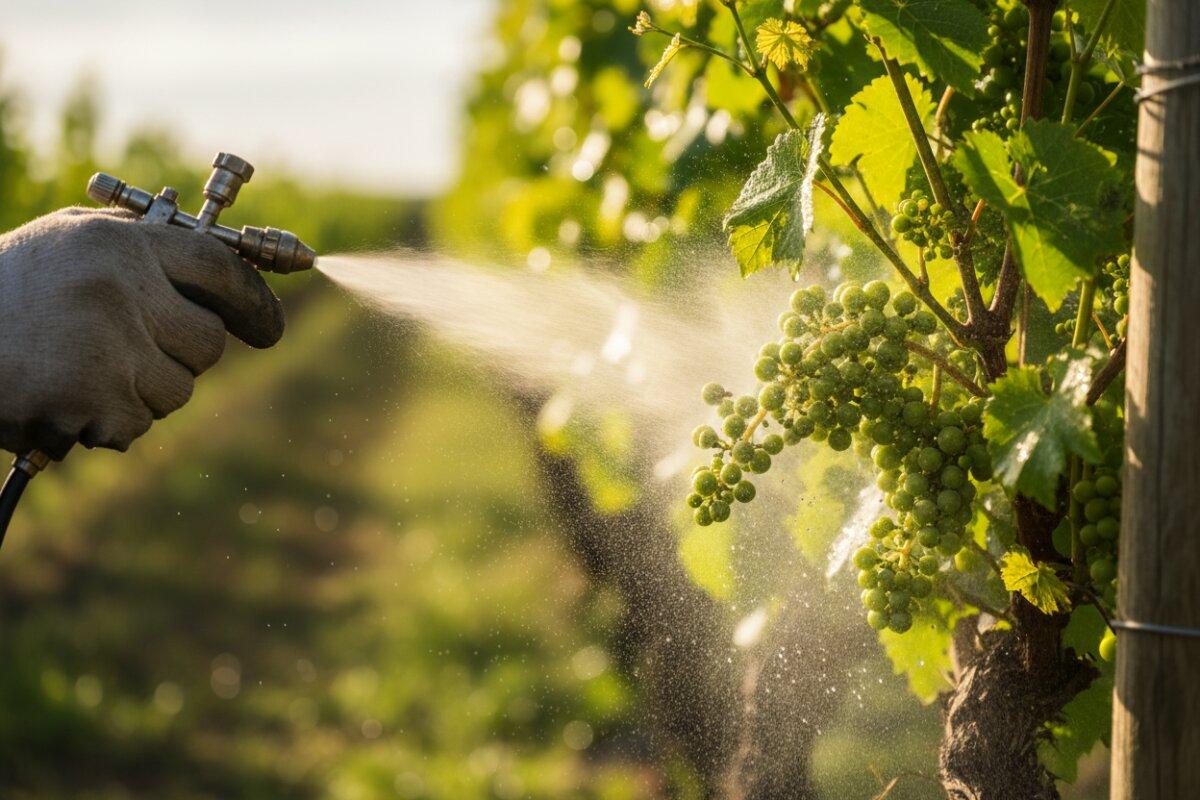
Grapevine Application
Crop protection application in a vineyard
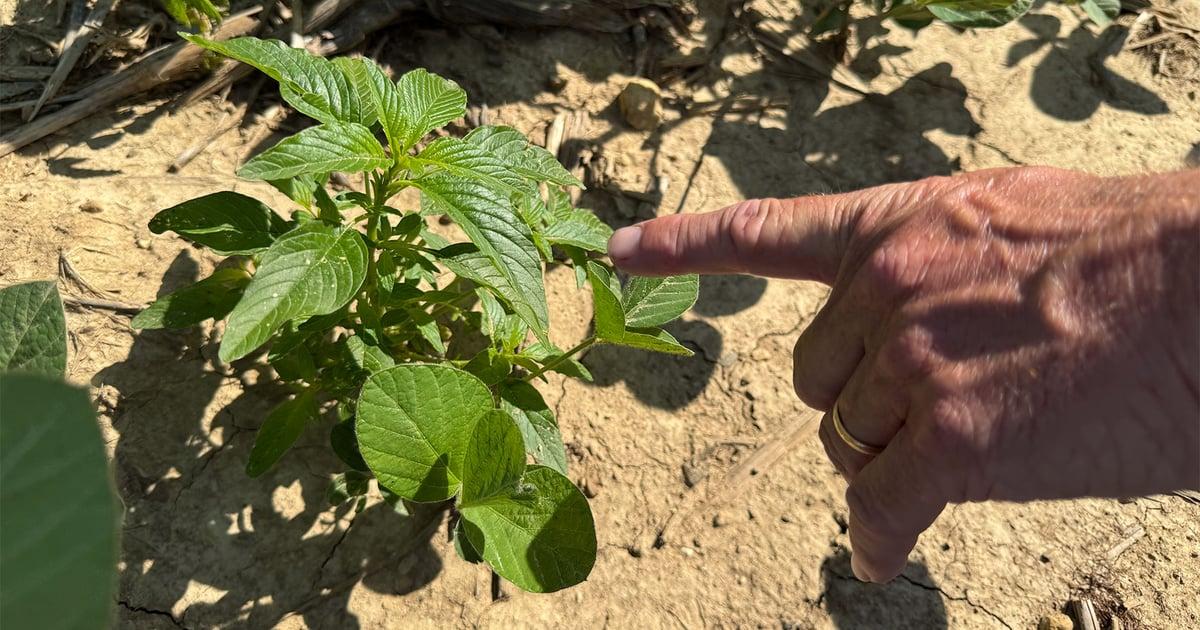
Crop Management
Managing weeds in a soybean cropping system
Illustrative imagery — not Agrospear field photography.
FAQ
PGR Formulations — Frequently Asked Questions
What PGR active ingredients do you formulate?+
Gibberellic acid (GA3), gibberellin A4+A7, paclobutrazol, uniconazole, ethephon, chlormequat, mepiquat chloride, forchlorfenuron (CPPU), brassinolide, triacontanol and auxin-based products. Custom combinations are available.
What is the MOQ for PGR formulations?+
Due to lower application rates, PGR pilot batches start at 1–5 tons depending on the active ingredient and concentration. Standard volume from 5+ tons per SKU. Sample batches for registration from 500 kg.
Do PGR formulations require special handling?+
Yes — many PGRs are effective at very low concentrations (ppm levels), so formulation precision and homogeneity are critical. We test active content uniformity per batch and provide certificate of analysis with every shipment.
Which PGR formulation types do you produce?+
We produce Soluble Liquids (SL), Suspension Concentrates (SC), Wettable Powders (WP) and water-dispersible granule and tablet formats. The choice depends on the active ingredient, application method and regional preferences — for example GA3 is common as SL, while paclobutrazol is supplied as SC or WP.
How do you ensure uniform active content at ppm-level rates?+
We use high-shear dispersion and multi-stage homogenization, then verify active content uniformity by HPLC on a batch basis with a stated tolerance. This prevents hot spots that can over-regulate or under-respond in the crop.
What is the application timing for major PGR actives?+
GA3 is applied at flowering and fruit set for parthenocarpic set and thinning; paclobutrazol is a soil or foliar spray at early shoot growth for dormancy and vigor control; ethephon is applied pre-harvest for ripening and at tillering for lodging control. Our technical team provides per-crop timing guidance during product development.
Do you supply registration data packages for PGRs?+
Yes. We prepare the complete dossier — five-batch analysis, accelerated and long-term stability, analytical methods and label/safety data — so your PGR can be registered in your target markets without technical gaps.
Can you formulate custom PGR combinations?+
Yes. Common combinations include GA4+7 plus a cytokinin such as CPPU for fruit size, and GA3 plus a retardant for balanced vegetative/fruit balance. We validate compatibility and provide stability data before pilot production.
What is the shelf life and temperature sensitivity of PGR formulations?+
Most PGR formulations carry a 2-year shelf life and remain stable up to 54 °C in accelerated testing. For heat-sensitive actives we design stabilizing systems and recommend controlled storage conditions, documented in the stability report.
What export documentation do you provide for PGR shipments?+
We provide certificate of analysis, certificate of origin, fumigation certificate, MSDS/SDS, GHS-compliant labelling and phytosanitary documentation so customs clearance is smooth in your destination market.